
How Does a Sailboat Move Without an Engine?
When you go sailing, the boat is powered entirely by moving air. There's no fuel and no motor noise, just three parts working together: the wind, the sails that catch it, and the keel, the heavy fin under the boat that keeps it on course.
Knowing a little about how they work makes your first sail even more fun, because you'll understand exactly what you're feeling.
Sails Work Like a Wing
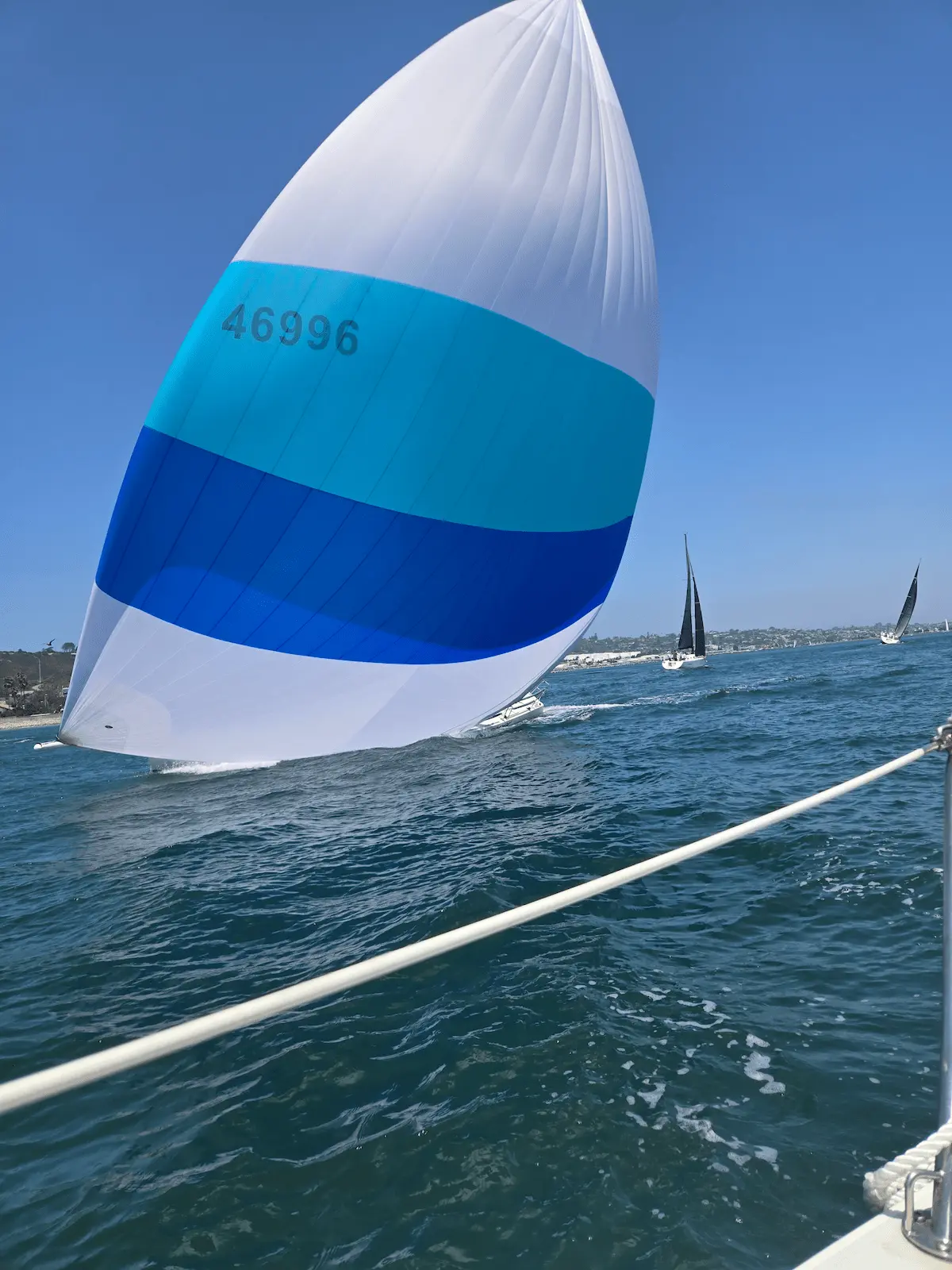
A sail isn't just a sheet that the wind pushes. Most of the time it works like an airplane wing standing on its end. As wind flows around the curved sail, the air is bent around it, creating lower pressure on the outside of the curve and higher pressure on the inside. That difference is called lift, and it pulls the sail, and the boat with it.
Lift pulls partly forward and partly sideways. The keel resists the sideways part, so the only easy direction left is forward. That's how a sailboat can glide across the wind, not just drift along with it.
Why You Can't Sail Straight Into the Wind
Point a sailboat directly into the wind and the sails simply flap. Sailors call this area the no-go zone, roughly 45 degrees on either side of the wind for most boats.
To reach a spot that's upwind, a sailboat zigzags back and forth across the wind. Each turn is called a tack. When you go sailing, you'll hear the captain call "ready about" before a tack. That's your cue to keep your head low as the boom swings across.
The Points of Sail
How a sailboat feels depends on where the wind is coming from:
Close-hauled
Sailing as close to the wind as possible. The boat leans the most and it feels lively.
Beam reach
Wind from the side. Often the fastest and most comfortable way to sail.
Broad reach
Wind from behind at an angle. Smooth, steady and relaxed.
Running
Wind straight from behind. The sails push like a parachute, and it feels calm and warm because you're moving with the wind.
Why the Boat Leans
When the wind fills the sails, the boat tilts to one side. This is called heeling, and it's completely normal. The heavy keel sits low under the water and acts as a counterweight, pulling the boat back upright.
A gentle lean is part of the fun. If anyone prefers a flatter ride, the captain can ease the sails to reduce it.
How Much Wind Is Good for Sailing?
- Under 5 knots: a slow, peaceful drift. Lovely for sunsets.
- 8 to 15 knots: the sweet spot for a relaxed but lively sail.
- 20 knots and up: exciting, and best for experienced crews.
On many coasts, including San Diego Bay, a sea breeze builds most afternoons. Land warms faster than water during the day, the warm air over land rises, and cooler air flows in from the sea to replace it. For more on timing and what to bring, see our guide to going sailing for the first time.
Wind and Sailing FAQ
Can a sailboat sail against the wind?
Not directly, but it can sail at an angle of about 45 degrees to the wind. By zigzagging back and forth, called tacking, a sailboat can reach any upwind destination.
Why does a sailboat lean?
The wind pushing on the sails tilts the boat. The heavy keel underneath acts as a counterweight and pulls it back upright, so a moderate lean is normal and safe.
Can a sailboat tip over?
Keelboats are designed to right themselves. The weight of the keel makes capsizing very unlikely in normal bay conditions.
What happens if there's no wind?
Most sailboats also have an engine, so you'll still get out and back on time. Light-wind days are often the calmest, most relaxing sails.
Feel It for Yourself: Go Sailing
Reading about wind power is one thing. Feeling a sailboat come alive under you is another. Book a private sail on San Diego Bay, and your captain will show you how it all works, or let you simply sit back and enjoy it.